Pilatus PC-12 NG at a glance: a turboprop with up to 8 passenger seats, cruising at 260 kt (482 km/h) with a range of about 1,500 NM (2,778 km). Wingspan 16.28 m, length 14.4 m, maximum take-off weight 4,740 kg, ceiling 30,000 ft. It needs roughly 2,650 ft of runway and can use unpaved airstrips. Charter planning rates in Africa start around US$2,500 per flight hour.
The Pilatus PC-12 NG is a single-engine turboprop that has become a favourite for African charter thanks to its rare blend of speed, cabin comfort and true short-field, unpaved capability. It seats up to eight in a pressurised, air-conditioned cabin, cruises far faster than piston twins, and still operates confidently from gravel and grass strips. For safari-and-business trips that mix a bush strip at one end and a city airport at the other, the PC-12 is hard to beat.
Manufactured by Pilatus Aircraft, 1994-present.
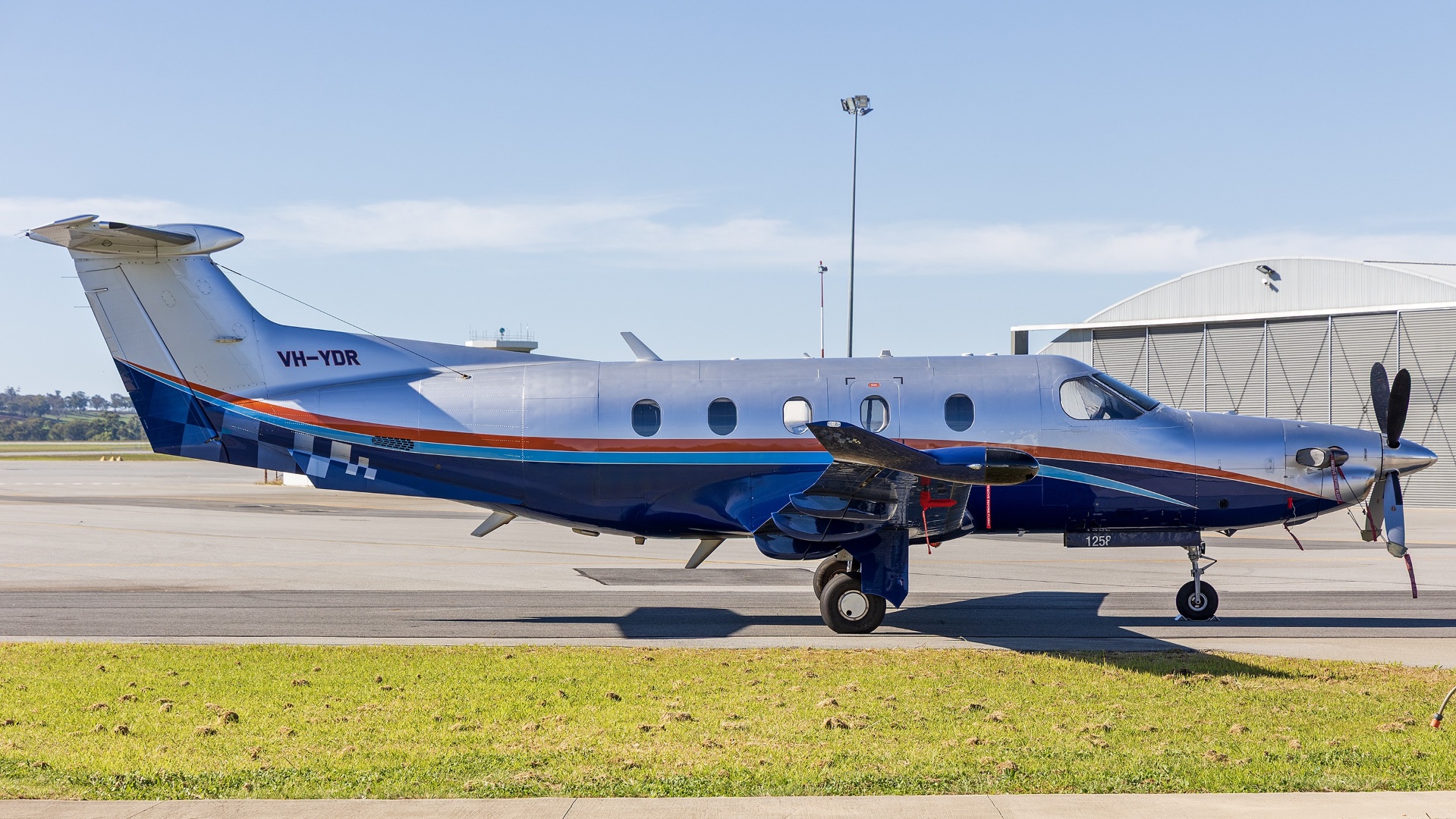
Our 2026 planning rate for the Pilatus PC-12 NG is about US$ 2,500 per flight hour. That hourly rate is only part of a charter price. The operator also bills the time spent flying the aircraft in from its base and back again, airport, handling and navigation fees, crew overnights on multi-day trips and, on short sectors, a daily minimum — so a one-hour flight rarely costs one hour’s rate. A route search prices the full rotation for the Pilatus PC-12 NG, positioning included, next to every other aircraft that can fly it.
For charter across Africa, the Pilatus PC-12 NG is typically positioned from its home base to your departure airport, flown to your destination, and returned afterwards — the estimate you see on a route search already accounts for this full rotation. Whether it suits a given trip depends on the runway at each end, the distance, and how many seats you need. Search any route to see a live estimate for the Pilatus PC-12 NG alongside every other aircraft that can fly it, then send an enquiry to have operators confirm the exact price.
Images are representative of the aircraft type — the actual aircraft, cabin layout and interior finish depend on the operating carrier. Specifications are typical planning figures for charter use and vary by individual aircraft configuration. Charter prices are computed estimates confirmed by the operating carrier through the inquiry process.
The Pilatus PC-12 NG is chartered as a whole aircraft, not per seat. Planning rates start around US$2,500 per occupied flight hour before airport, handling and navigation charges. On most African sectors the larger variable is positioning: if no Pilatus PC-12 NG is sitting at your departure airport, the empty leg flown in to collect you is priced into the quote, which is why a short hop can cost more than its flight time suggests. Every route page on this site shows the all-in estimate rather than the bare hourly rate.
Up to 8 passengers in the cabin layout typically offered for charter in Africa. Operators configure individual aircraft differently, so the usable seat count on the specific tail allocated to your trip is confirmed at quote stage, along with baggage allowance, which is usually the binding limit on safari and golf trips rather than seats.
The Pilatus PC-12 NG plans to roughly 1,500 nautical miles (about 2,778 km) with normal reserves. From its Johannesburg base that reaches scheduled airports in 20 African countries without a fuel stop. Hot and high departures, strong headwinds and a full cabin all reduce that figure, so longer sectors are planned with a technical stop where needed.
It needs roughly 2,650 ft of paved runway at typical charter weights. On our airport data that covers 364 of the 394 African airports with scheduled service, before allowing for elevation, temperature and runway condition on the day. Its short-field performance also opens up regional and bush strips that jets cannot use, which is what makes it the workhorse for safari and remote-site flying.
Pilatus PC-12 NG aircraft in our fleet data are based at Addis Ababa, Arusha, Dakar, Johannesburg, Lusaka, Maputo and other bases. Departing from or near one of those cities keeps positioning cost down, because the aircraft does not have to fly an empty leg to reach you.
The Pilatus PC-12 NG has a wingspan of 16.28 m (53.4 ft) and an overall length of 14.4 m (47.2 ft). Those dimensions decide which hangars and apron stands can take it, which matters at smaller African airports where parking for business jets is limited.
The Pilatus PC-12 NG has a maximum take-off weight (MTOW) of 4,740 kg (10,450 lb), with a maximum payload of about 1,690 kg and an empty weight of about 3,050 kg. On hot, high or short runways the usable take-off weight is lower, which can limit fuel, passengers or baggage on the day.
The Pilatus PC-12 NG is certified to a maximum operating altitude of 30,000 ft (9,144 m) and cruises at about 260 knots (482 km/h). The crew picks the actual cruising altitude for each sector from its length, the aircraft weight and the winds; short hops are flown lower.
Typical baggage capacity for the Pilatus PC-12 NG is 1.1 m3. Soft-sided bags pack far better than hard cases, and on safari sectors the combined weight of passengers and bags is usually the real limit, so give the operator your bag count when you request a quote.
The Pilatus PC-12 NG is powered by 1 x P&WC PT6A-67P turboprop. It is flown by a crew of 1-2. It is built by Pilatus Aircraft (1994-present).
In our fleet data the Pilatus PC-12 NG is based at Addis Ababa, Arusha, Dakar, Johannesburg, Lusaka, Maputo, Mauritius, Mombasa. Flying from or near a base keeps the positioning cost out of the price.