East to West — Indian Ocean to Atlantic
A landscape-led crossing of Southern Africa: Swahili coast, Zambezi, inland delta, red desert and finally the cold Atlantic edge.
Zanzibar → Victoria Falls → Okavango Delta → Namib Desert → Skeleton Coast
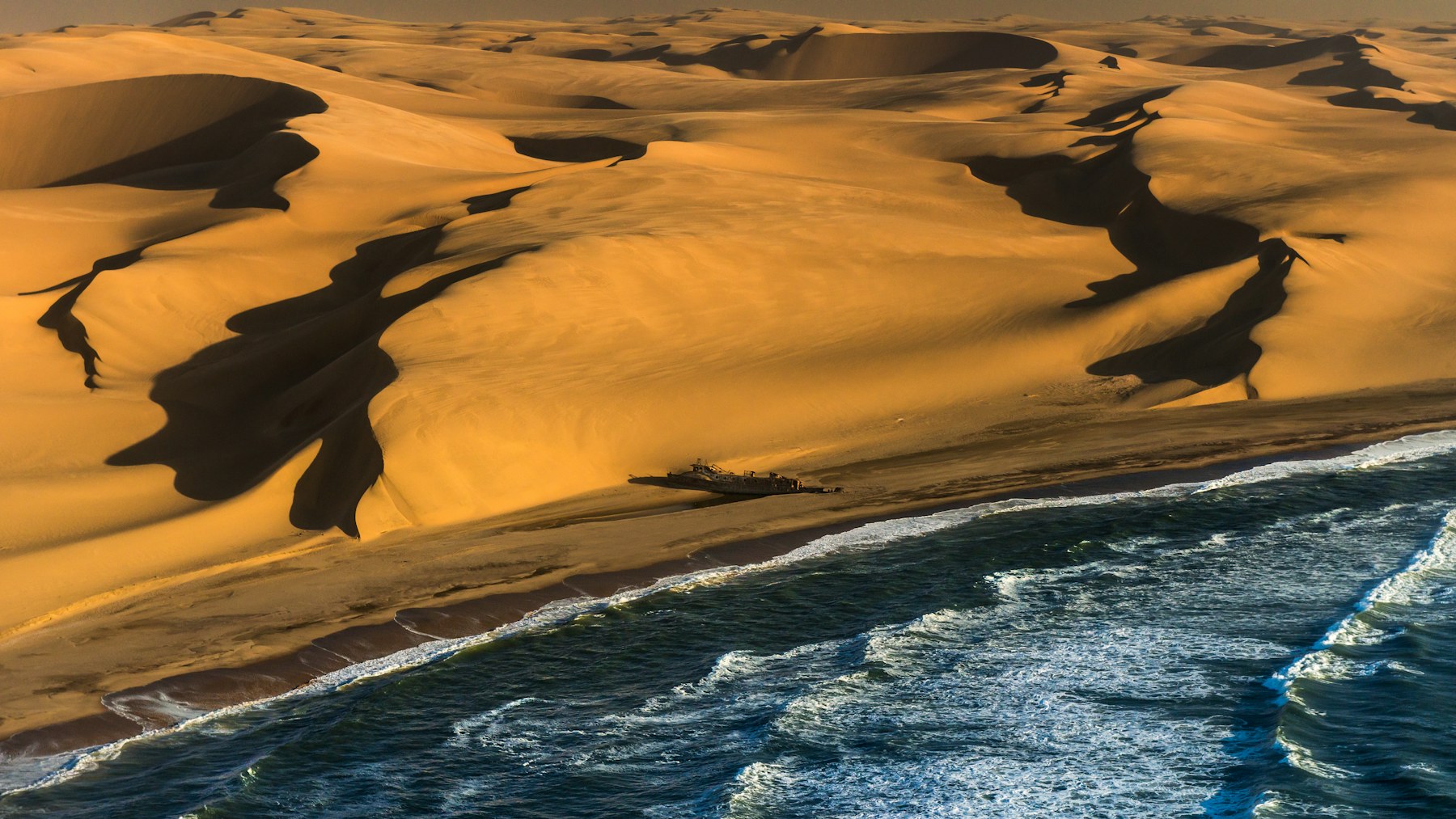
This is one of the most distinctive routes on the site because it is not built around collecting famous safari reserves. The point is the transition: warm Indian Ocean, a major river, flooded wilderness, hyper-arid desert and Atlantic fog.
The route I would use
Days 1–3 — Zanzibar, Tanzania
Start with culture and water rather than safari. Stone Town gives the route a human story before the landscapes become progressively emptier as you travel west.
Check Park Hyatt Zanzibar on Expedia ↗
Aviation: Zanzibar (ZNZ) → Victoria Falls (VFA) is about 1,055 nm and typically around 2½–3 hours in a suitable midsize jet.
Days 4–5 — Victoria Falls, Zimbabwe
Use Victoria Falls as the hinge between East and Southern Africa. One day for the Falls and one for the Zambezi is enough before the journey turns toward the Kalahari.
Check Matetsi Victoria Falls on Expedia ↗
Aviation: VFA → Maun (MUB) is about 180 nm and normally around 50–65 minutes by turboprop/light aircraft.
Days 6–8 — Okavango Delta, Botswana
The Delta is the green centre of the crossing. Give it three nights; this is the only classic safari chapter and should not be compressed.
Check Xigera Safari Lodge on Expedia ↗
Aviation: Maun → lodge strip is typically another 20–45 minutes by bush aircraft. On departure, return to Maun for the international westbound sector.
Days 9–10 — Namib Desert, Namibia
Move from floodwater to near-absolute aridity. I would choose one desert property and stay there rather than trying to combine Windhoek, Swakopmund and Sossusvlei as separate hotel stops.
Check Zannier Sonop on Expedia ↗

Aviation: Maun (MUB) → Windhoek/Hosea Kutako (WDH) is about 365 nm and usually 1¼–1½ hours by King Air/light jet. From WDH continue by light aircraft or arranged helicopter/road transfer to the lodge’s confirmed access point.
Days 11–13 — Skeleton Coast
Finish with the least conventional landscape: fog, dunes, surf and almost no settlement. This should be the final chapter rather than a day excursion from Swakopmund.
Check Shipwreck Lodge on Expedia ↗
Aviation: the Namib → Skeleton Coast movement should stay on a light aircraft/lodge operation. Allow roughly 1½–2¼ hours depending on the exact desert origin, coastal strip and scenic routing.
Flight plan at a glance
| Sector | Practical routing | Indicative time |
|---|---|---|
| Zanzibar → Victoria Falls | ZNZ → VFA · midsize jet | ~2½–3 hr |
| Victoria Falls → Okavango | VFA → MUB, then bush aircraft | ~50–65 min + ~20–45 min |
| Okavango → Namibia | Camp strip → MUB → WDH | ~20–45 min + ~1¼–1½ hr |
| Windhoek → Namib lodge | WDH → suitable strip/heli/road transfer | ~50–80 min flying where used |
| Namib → Skeleton Coast | Light aircraft/lodge operation | ~1½–2¼ hr |
Best season
June to September is the strongest landscape-and-wildlife window. The Okavango flood is usually well developed, Namibia is dry and clear, and the coast remains characteristically cool/foggy. Desert mornings can be genuinely cold, so the packing brief should reflect that.
How I would price it
Price ZNZ–VFA and MUB–WDH first. Then obtain one regional/lodge-aircraft proposal for the western Namibia sequence rather than booking each short hop independently. Use the charter search and pricing methodology as the planning baseline.
Hotel links above are affiliate links; privatejet.africa may earn a commission at no additional cost to you.
Related planning
Times are indicative planning ranges. Final routing depends on lodge airstrips, international procedures, permits, weather, aircraft performance, baggage and operator approval.